



Allele: 'fas-1'
| Allele details |
[New] [Edit] [Delete]
Allele synonyms: [Add/remove]
| Locus name | Solyc11g071810 |
| Allele symbol | fas-1 |
| Allele name | insertional allele |
| Mode of inheritance | recessive |
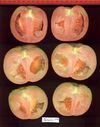
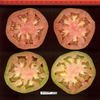
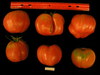
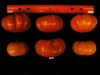
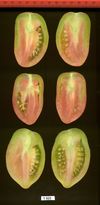
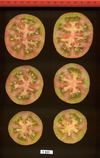
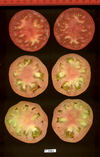
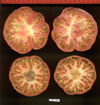
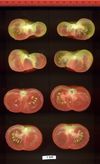
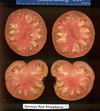
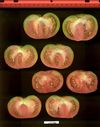
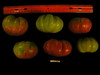
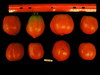
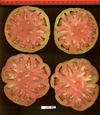
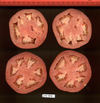
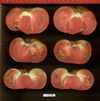
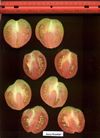
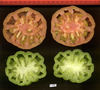
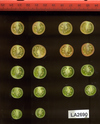
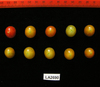
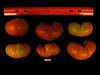
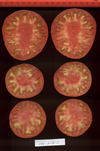
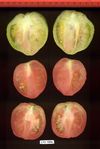
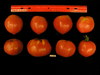
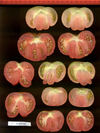
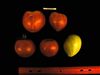
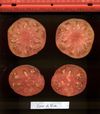
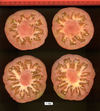
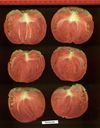
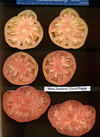
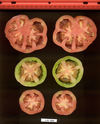
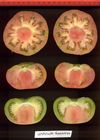
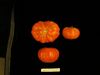
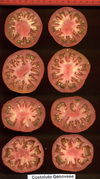
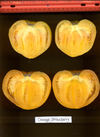
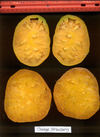
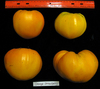
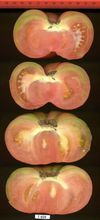
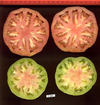
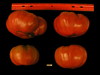
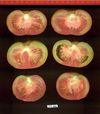
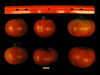
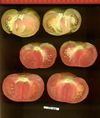
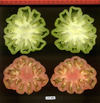
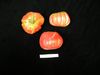
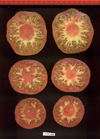
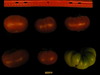
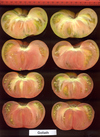
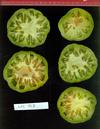
| Phenotype | Fruits many-loculed |
| Sequence/mutation | This allelic variant is a 6-8 kb insertion in the first intron of a YABBY-like transcription factor |
Allele synonyms: [Add/remove]
 Associated accessions Associated accessions
| [Associate accession] |



























































| Sequence annotations (0) | [Associate new genbank sequence] |
 Literature annotation Literature annotation
| [associate new publication] |
PMID:18469814 Regulatory change in YABBY-like transcription factor led to evolution of extreme fruit size during tomato domestication.
Show/hide abstract
Plant domestication represents an accelerated form of evolution, resulting in exaggerated changes in the tissues and organs of greatest interest to humans (for example, seeds, roots and tubers). One of the most extreme cases has been the evolution of tomato fruit. Cultivated tomato plants produce fruit as much as 1,000 times larger than those of their wild progenitors. Quantitative trait mapping studies have shown that a relatively small number of genes were involved in this dramatic transition, and these genes control two processes: cell cycle and organ number determination. The key gene in the first process has been isolated and corresponds to fw2.2, a negative regulator of cell division. However, until now, nothing was known about the molecular basis of the second process. Here, we show that the second major step in the evolution of extreme fruit size was the result of a regulatory change of a YABBY-like transcription factor (fasciated) that controls carpel number during flower and/or fruit development. Cong, B. Barrero, LS. Tanksley, SDNature genetics200840(6)800-4
PMID:26005869 A cascade of arabinosyltransferases controls shoot meristem size in tomato.
Show/hide abstract
Shoot meristems of plants are composed of stem cells that are continuously replenished through a classical feedback circuit involving the homeobox WUSCHEL (WUS) gene and the CLAVATA (CLV) gene signaling pathway. In CLV signaling, the CLV1 receptor complex is bound by CLV3, a secreted peptide modified with sugars. However, the pathway responsible for modifying CLV3 and its relevance for CLV signaling are unknown. Here we show that tomato inflorescence branching mutants with extra flower and fruit organs due to enlarged meristems are defective in arabinosyltransferase genes. The most extreme mutant is disrupted in a hydroxyproline O-arabinosyltransferase and can be rescued with arabinosylated CLV3. Weaker mutants are defective in arabinosyltransferases that extend arabinose chains, indicating that CLV3 must be fully arabinosylated to maintain meristem size. Finally, we show that a mutation in CLV3 increased fruit size during domestication. Our findings uncover a new layer of complexity in the control of plant stem cell proliferation. Xu, C. Liberatore, KL. MacAlister, CA. Huang, Z. Chu, YH. Jiang, K. Brooks, C. Ogawa-Ohnishi, M. Xiong, G. Pauly, M. Van Eck, J. Matsubayashi, Y. van der Knaap, E. Lippman, ZBNature genetics201547(7)784-92
| User comments | [Add comment] |
Working